A Young Rohingya Poet Wants the World to Listen

By Dr. Sarder A. Haider
Most of us hear about the Rohingya through news of hardship. We read about food shortages, crowded camps and the long wait to return home. These stories are important. But they can leave us with a narrow picture of the people behind them.
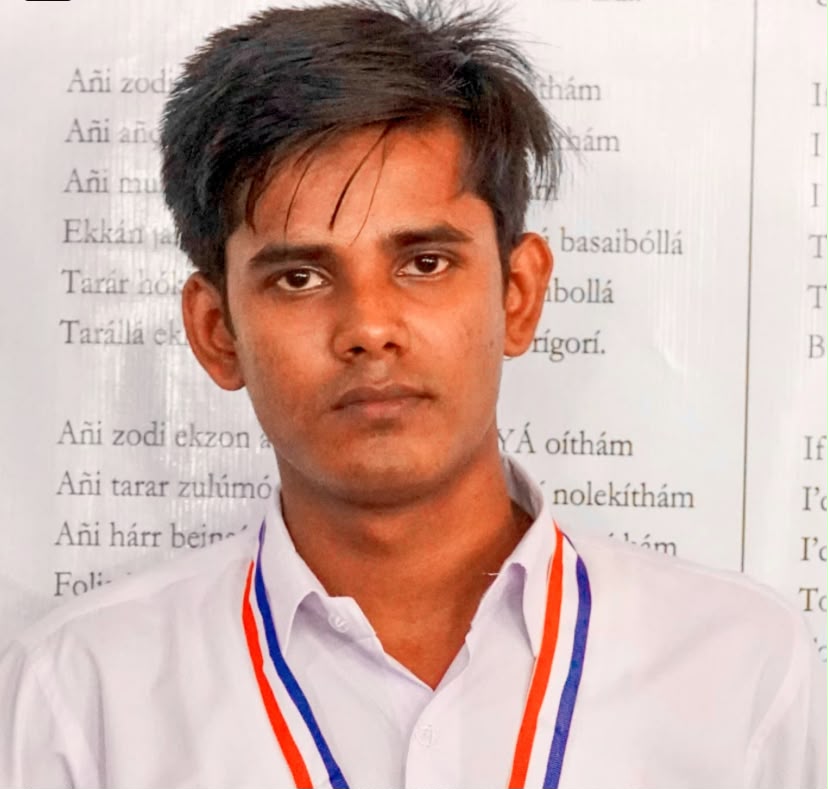
Ro Hefzu offers another way to see life in the camps. He is 22 years old. He teaches Rohingya children in Cox’s Bazar, studies online and writes poetry. His first book, Still I Breathe: Voices the World Must Hear, was published this year. It was launched at a gathering in Cox’s Bazar on 14 August 2026. (rohingyafutures.com, tomorrowclub.world, books.google.com)
Hefzu comes from Kyaung Taung village in Buthidaung Township, in Myanmar’s Rakhine State. He now lives in a refugee camp in Bangladesh. Like many young Rohingya, he has had to build a life far from the place his family called home. Yet he has continued to learn, teach and write. (rohingyafutures.com)
There is something deeply human in that choice. When daily life is difficult, writing a poem may seem less urgent than finding food or keeping a child in school. But people need more than the means to survive. They also need to remember, to speak and to imagine a future. Hefzu’s book gives him room to do those things in his own words.
His poems draw on the pain of persecution and exile. They also speak about friendship, love, education, festivals and the Rohingya language. That matters. People living through a crisis still have families, friendships and ordinary hopes. Their stories do not begin and end with suffering. (rohingyafutures.com)
The title of the book is simple: Still I Breathe. To me, it carries a quiet message. Hefzu is saying that he and his community are still here. They have endured loss, but they have not lost the wish to be heard. Readers may find other meanings in his poems. What matters is that the voice belongs to him.
Hefzu is also a teacher. He helps younger Rohingya learn in the camp while pursuing an undergraduate degree in business administration through the University of the People. His work in the classroom deserves as much attention as his writing. Each child he teaches gains a little more knowledge and a little more confidence to face the years ahead. (rohingyafutures.com, tomorrowclub.world)
Education remains a serious concern for Rohingya families. In May 2025, UNICEF warned that the education of around 230,000 refugee children was at risk because of a shortage of funds. The next year, UNICEF and the Asian University for Women announced formal training certificates for more than 1,100 volunteer teachers in the camps. These teachers are doing essential work, often under difficult conditions. (unicef.org, unicef.org)
A child who misses years of school cannot easily recover that time. This is why teachers from within the Rohingya community are so valuable. They understand the children’s language and experiences. They can help keep learning alive, even while families wait for a lasting answer to their displacement.
Hefzu’s book has its own lesson about access. Publishing a book did not mean that his friends and family in the camp could read it. According to Tomorrow Club, a platform for young writers linked to PEN International, Hefzu could not afford to give them copies. He reached out for help. PEN supported the launch, and fellow Rohingya writer Mayyu Ali helped arrange for copies to be printed and shared at the event. (tomorrowclub.world)
It is a small detail, but it stays with me. Imagine writing your first book and then finding that the people closest to you cannot hold a copy. The problem was practical, and so was the response: print the books and bring them to readers.
We can learn from that. Rohingya writers need readers inside the camps as well as abroad. Young people should be able to find books written by members of their own community. They should have chances to write, too. A reading group, a place to keep books, or help with printing and translation could make a real difference.
Any such effort should start by listening to the writers themselves. They know which stories they want to tell. Some may write about violence and loss. Others may write about childhood, faith, humour or love. No writer should feel that every poem must explain an entire people to the outside world.
Hefzu is one of several Rohingya poets whose work has found a wider audience. Rohingya Futures, which presents his collection, also features books by other Rohingya writers. Tomorrow Club has published Hefzu’s work and introduced him to readers beyond Bangladesh. Together, these efforts show that there are many voices to hear, not just one. (rohingyafutures.com, tomorrowclub.world)
Bangladesh has given refuge to Rohingya families for years. Hosting so many people has placed real pressure on local communities and public services. Those concerns deserve serious attention. So does the question of how young Rohingya can spend these years with purpose, learning and contributing to their communities.
Supporting education and creative work will not settle the larger crisis. It cannot make conditions in Myanmar safe for return. Those questions demand political action and continued international attention. But while families remain in Bangladesh, their children are growing up. They cannot put their education, talents and hopes on hold.
This is why Hefzu’s story matters beyond the publication of one book. He is a young man living through displacement. He is also a student who has found a way to continue his studies, a teacher helping children and a poet asking others to listen.
We often say that people should have a voice. Hefzu has already found his. The next step is ours: to read his work with care and to make room for other Rohingya writers to speak for themselves.
For More Info Click Here.
Follow Our Facebook Page From Here.
Subscribe Our Youtube Channel quickly.