Sirajul Islam: A Rohingya Poet Who Wants to Be Heard
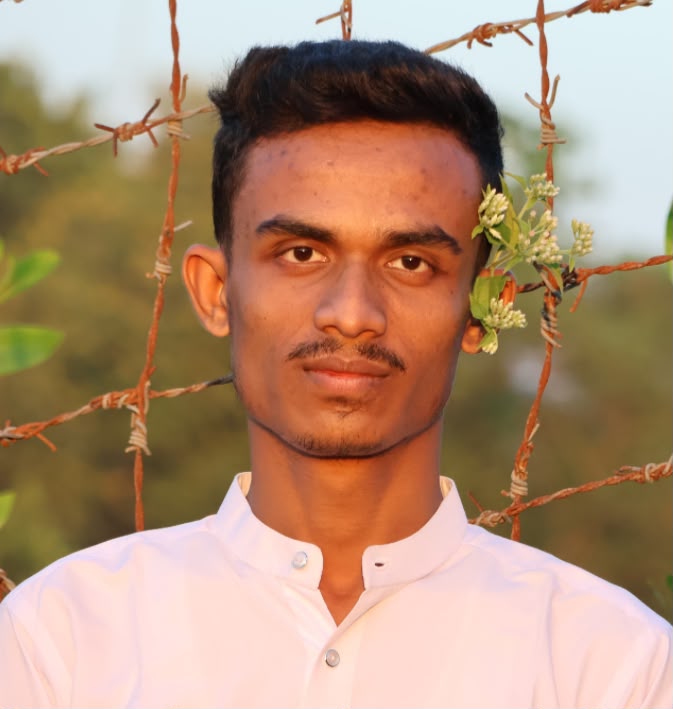

By Dr. Sarder A. Haider
Sirajul Islam wanted to become a doctor. He was a schoolboy in Myanmar and had plans for his future. Then violence forced his family to leave their home. They fled to Bangladesh in 2017. Sirajul’s schooling stopped. He now lives in a Rohingya refugee camp in Cox’s Bazar. He has become a poet. (love4immigrants.org, events.humanitix.com)
Sirajul was born in 2002 in Myanmar’s Rakhine State. According to a profile in Rohingya Khobor, he grew up in Thinganet village in Buthidaung Township. He studied through Grade 9. In an account of his life published in 2022, he remembered being a student with great hope. He also remembered the happy times he had at school. (love4immigrants.org, rohingyakhobor.com)
When a family flees its home, it loses many things. Children leave their schools and friends. Parents leave work and familiar places. They may not know when they will return. For Sirajul, leaving Myanmar also meant losing the path towards the career he had chosen.
He began to write poetry. Writing gave him a way to describe his feelings and speak about the lives of other Rohingya. He put his purpose in three simple words: “I write for rights.” (love4immigrants.org)
That sentence tells us why his poems matter to him. Sirajul writes about fear, lost opportunities and the wish to live in safety. He writes about freedom and the hope of being heard. These subjects come from his own life, but many other people can understand them.
Sirajul is also interested in photography. In his 2022 account, he described himself as both a poet and a photographer. A photograph can show a moment in someone’s life. A poem can tell us what that moment feels like. Through both, Sirajul can share what he sees in a way that is his own. (love4immigrants.org)
He has published three poetry collections. The first is If I Were a Bird: A Voice of Resilience. The second is Still I Smile: A Voice for the Voiceless. His third book, Resistance for Existence, was presented by Rohingya Futures in 2026. The books return to questions of home, safety, freedom and hope. (events.humanitix.com, rohingyafutures.com)
The title If I Were a Bird is easy to picture. Birds can fly from one place to another. They do not need a passport. In one of his poems, Sirajul imagines being able to cross a border as freely as a bird. It is a simple wish. It also says a great deal about how hard it can be for a person to move safely. (rohingyakhobor.com)
Another poem is called “Night Is Not Romantic for Me.” For many people, night is a time to rest. Sirajul describes it as a time of fear. He writes about lying awake and waiting for morning. Readers do not need to have lived in a refugee camp to understand the wish for a peaceful night. (rohingyakhobor.com)
These are Sirajul’s poems. They tell us how he sees and feels things. They cannot tell every Rohingya person’s story. No one writer can do that. But they can help us listen to one person more closely.
We often read about the Rohingya in reports and news stories. We need that information. It helps us understand the scale of the crisis and the needs of families in the camps. Poetry does something else. It asks us to pause over a single thought or feeling. It reminds us that every large number is made up of individual lives.
Sirajul has found readers outside the camps. Tomorrow Club, a platform for young writers, has published his work. In March 2025, The Daily Star published an article in which he wrote about the need for accountability for atrocities against the Rohingya. He uses both poetry and newspaper writing to take part in public discussion. (tomorrowclub.world, thedailystar.net)
In August 2025, PEN Perth invited him to take part in a poetry reading in Australia. The event was called “We Belong Here.” Sirajul was invited to join by video from the refugee camp in Bangladesh. His words could reach the room, even though he could not be there in person. (events.humanitix.com)
It is good that his work is reaching readers in other countries. Yet we should remember what he had to overcome to get this far. Sirajul’s education stopped when his family fled. He has kept learning and writing, but a published book cannot give him those school years back.
Many young Rohingya have talents they want to develop. Some wish to study medicine, as Sirajul once did. Others want to teach, write, make art or learn a trade. They need steady chances to study and practise their skills. They also need to see that the years they spend in the camps are taken seriously.
Bangladesh has given shelter to Rohingya families for many years. This has placed real pressure on local communities and public services. Those concerns matter. So do the lives of the children and young adults who are growing up in the camps. Helping them learn and use their abilities is a practical way to support their future.
Poetry cannot solve the Rohingya crisis. It cannot make it safe for families to return to Myanmar. Those tasks need action from governments and the international community. But a poem can help a writer keep a memory alive. It can help a reader understand a life they have never lived.
There is another reason to read Sirajul carefully. We should not see him only as someone who has suffered. He was once a boy who wanted to become a doctor. He enjoys writing and photography. He has published books and shared his views in a newspaper. He has plans and opinions of his own.
Sirajul writes for rights. He also writes because writing has become part of his life. His poems ask readers to think about what it means to feel safe, to learn and to call a place home.
We cannot give Sirajul the childhood he lost. We can read what he has written. We can take his ideas seriously. And we can make space for more Rohingya writers to tell their stories in their own words.
For More Info Click Here.
Follow Our Facebook Page From Here.
Subscribe Our Youtube Channel quickly.