The Gambia and the Rohingya Genocide Verdict
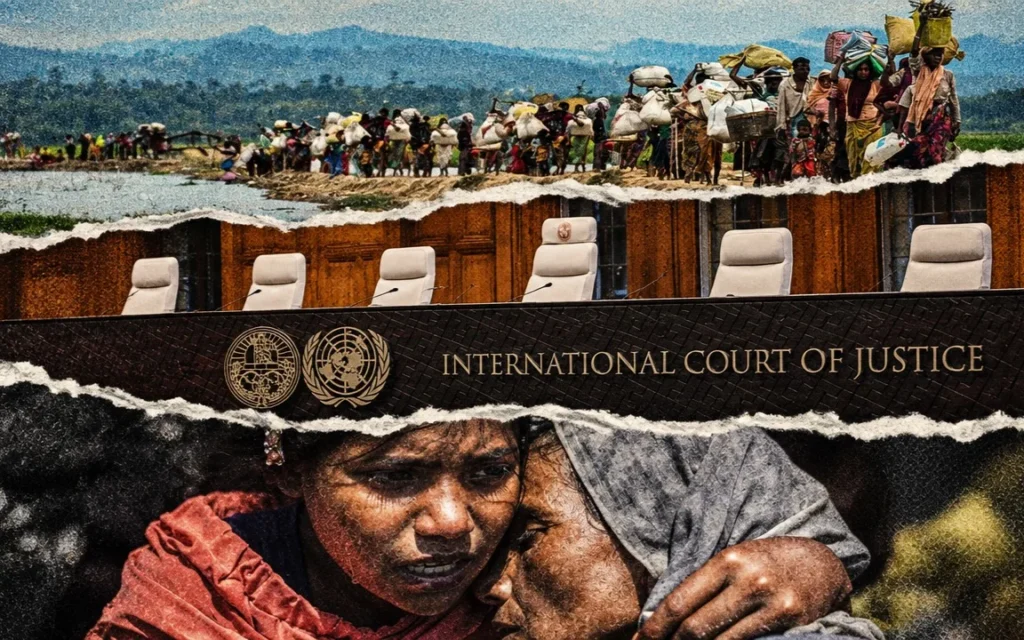

What other countries can learn from the case…..
Dr. Sarder Ali Haider
On 19 November 2026, the International Court of Justice (ICJ) found that Myanmar committed genocide against the Rohingya in northern Rakhine State. The case was brought by The Gambia, a West African country thousands of kilometres from Myanmar. It filed its application in 2019 with support from the Organisation of Islamic Cooperation (OIC). Seven years later, the Court held Myanmar responsible. The case shows what a country can do when it takes an international obligation seriously, even when the people at risk live far beyond its borders. [1, 2]
The Gambia deserves credit for taking the lead. Other governments could have shared more of the work. Eleven states eventually intervened, and several countries and institutions supported the wider pursuit of justice. Yet there was room for earlier and broader participation. The lesson for future cases is that states should agree early on who can bring a case, who can support it, and who will help secure compliance if the court finds a violation. Each of those jobs takes time and resources. [2, 3]
What the Court decided
The Court found, by nine votes to six, that Myanmar committed genocide against the Rohingya during the 2017 military operations in northern Rakhine. It also found that Myanmar failed to punish genocide and related acts under the Genocide Convention. The Court ordered Myanmar to take immediate and effective steps to investigate people reasonably suspected of such acts and to prosecute and punish them where warranted. It also ordered Myanmar to enact legislation giving full effect to its obligations under the Convention and to take action to prevent similar violations. These are obligations of the Myanmar state. Individual criminal responsibility would be decided in separate proceedings. [1, para. 646]
The judgment also says what repairing the harm should involve. Myanmar must facilitate safe, voluntary and dignified return and family reunification for Rohingya displaced by its wrongful acts. It must return or replace lost or damaged property, help families search for people who disappeared, and provide physical and psychological rehabilitation. It must also protect Rohingya people from discrimination and persecution. Myanmar owes compensation for damage that cannot be made good through restitution. The Court reserved the amount and arrangements for a later phase. It gave Myanmar two years to report on the steps it has taken and its proposals for compensation where full restitution is impossible. [1, paras. 615, 622–625, 646]
Why The Gambia could act
The Gambia relied on the 1948 Genocide Convention. Article I commits states parties to prevent and punish genocide. Article IX gives the ICJ jurisdiction over disputes between states parties concerning the Convention where the relevant states have accepted that jurisdiction. Myanmar challenged The Gambia’s right to bring the case, arguing in part that it was not specially affected. In 2022, the Court rejected the objection. It held that states parties share a legal interest in compliance and that The Gambia could invoke Myanmar’s responsibility without showing that it had suffered a special injury. [4, 5]
This was especially important for Bangladesh, which had received a large share of the people fleeing Myanmar. Bangladesh has a declaration under Article IX requiring the consent of all parties to a dispute before it can be submitted to the Court under that provision. The ICJ held that Bangladesh’s position did not bar The Gambia from bringing its own case. The country closest to a crisis may face a jurisdictional obstacle. A country elsewhere may be able to proceed. Governments should therefore examine their treaty commitments and any reservations before deciding they have no legal role. [4, 6]
The Gambia also benefited from work that began well before its filing. In 2018, the UN fact-finding mission on Myanmar set out evidence of grave abuses and recommended investigation and prosecution of senior military leaders for genocide in relation to Rakhine State. In 2020, while the case was pending, the ICJ ordered provisional measures. These required Myanmar to act to prevent acts covered by the Convention and to preserve evidence. The final judgment later found a breach of the evidence preservation requirement. That finding illustrates why early protection and preservation orders deserve diplomatic attention while a case is still being heard. [1, para. 646(12), 7, 8]
How more countries could have helped
Eleven states intervened in the case under Article 63 of the Court’s Statute. Canada, Denmark, France, Germany, the Netherlands and the United Kingdom filed jointly. The Maldives, Slovenia, the Democratic Republic of the Congo, Belgium and Ireland filed separately. They could present views on how the Genocide Convention should be interpreted, while The Gambia remained the applicant. The interventions showed that countries across regions could help clarify common treaty obligations through a single case. The Maldives and the Democratic Republic of the Congo are particularly relevant examples for governments that assume this work belongs mainly to major Western powers. [2, 3, 9]
More governments could have taken part where the legal conditions allowed or backed the effort through other means. Funding specialist legal work, supporting the translation of testimony, and helping protect witnesses can all make a case easier to sustain. States can also cooperate with independent investigators and preserve records already in their possession. Regional organisations can keep the issue on ministerial agendas while the lawyers do their work. Such contributions should respond to requests from the applicant, investigators and affected communities. Donors can help most by sustaining work that those groups regard as necessary through the years a case may take. [2, 7, 10]
There is already an example of one contribution serving several legal processes. The UN’s Independent Investigative Mechanism for Myanmar shared selected evidence with both parties to the ICJ case. It also shares evidence with criminal investigators, including the Office of the Prosecutor of the International Criminal Court and prosecutors in Argentina, subject to safeguards. Witnesses may face risks when their testimony moves from one institution to another. Reliable funding for interpreters, witness support and secure handling of evidence would help investigators take that risk seriously. Governments that host witnesses can also help them reach investigators safely. [10]
Countries should also apply consistent standards when serious warnings concern a partner with which they have close diplomatic or commercial ties. Those relationships may give governments ways to influence conduct before escalation. In its 2007 judgment in the Bosnia and Herzegovina v. Serbia and Montenegro case, the ICJ explained that the duty to act arises when a state learns, or should normally have learned, of a serious risk of genocide. The measures reasonably open to a state depend in part on its capacity to influence the actors concerned. Governments can use credible warnings to consider what their own contacts, trade relationships or diplomatic channels allow them to do. That review should begin while preventive action can still help. [5, 11]
What governments can do after the verdict
The United Kingdom ordered the expulsion of Myanmar’s defence attaché and called for a UN Security Council meeting on the judgment. Article 94 of the UN Charter provides that if a party fails to perform its obligations under an ICJ judgment, the other party may have recourse to the Security Council. In this case, that means The Gambia can use that route if Myanmar fails to comply. The Council has discretion over its response. A meeting would provide an opportunity for governments to ask about specific orders, hear from Rohingya representatives, and request follow-up on what has been done. [12, 13]
There is also a role for ASEAN. In its Manila decision of 15 November, ASEAN kept Myanmar’s representation at summits and foreign ministers’ meetings at a non-political level. It left open a gradual restoration of full political representation if Myanmar makes sustained and concrete progress on the Five-Point Consensus. The genocide judgment came four days later. ASEAN should now ask what Myanmar is doing to comply with the judgment when it considers whether to ease those restrictions. One practical measure would be whether independent observers can reach Rohingya communities in Rakhine and report on their safety. The ASEAN special envoy can also consult Rohingya representatives directly and raise their priorities with the foreign ministers. [1, 14]
Bangladesh and other partners can assist with the next phase before the reporting deadline arrives. For example, Bangladesh could work with Rohingya organisations and independent experts to document lost property, family separation and harm that calls for rehabilitation. Many survivors may need ways to explain their losses through witness statements or community records if formal ownership documents are unavailable. Any effort to gather information should be voluntary and protect confidentiality. Rohingya women and people displaced within Myanmar should also be able to identify harms that could otherwise receive little attention. The Gambia could draw on this work as it prepares its position on reparations. The Court will decide the form and amount of compensation or other appropriate reparation in the next phase. [1, paras. 615, 625]
The ruling also changes the basis for discussions about refugee return. Myanmar has a specific obligation to facilitate safe, voluntary and dignified return for those displaced by its wrongful acts. In practice, families will need reliable information about conditions in the places to which they would return. That includes whether they can move freely, use essential services and live without persecution. UNHCR has also stressed the importance of a pathway to citizenship for sustainable return. Bangladesh and its partners can use those conditions to guide any discussions about return while continuing to support refugees and host communities. [1, para. 615, 15]
Countries can support implementation even when they have little influence over events in Rakhine. They can fund legal assistance for survivors and support rehabilitation services in places where displaced people live. Governments with stronger ties to Myanmar can raise specific obligations in bilateral meetings and ask for evidence of progress. Diplomatic partners could agree on a common set of questions for regular review. Have families received help to trace missing relatives? Have independent investigators obtained access? Have property claims been heard? Public answers, with safeguards for survivors, would help show where further action is needed. [1, para. 615]
The reporting deadline also gives governments a way to organise their efforts. A group of interested states could agree to review implementation every six months and share a brief account of its findings. Their review could identify which measures Myanmar says it has taken, what independent sources can verify, and which issues Rohingya representatives want raised next. This would be a diplomatic initiative. The Court’s own reporting requirement remains the one set out in its judgment. Regular follow-up would make it harder for the issue to disappear from foreign ministries’ agendas as public attention shifts. [1, para. 625]
The principle of shared responsibility also applies to the costs borne by countries hosting people who escaped atrocities. Bangladesh has provided refuge while the case moved through the Court. If international attention now turns to reparations, support for education, health care and protection in Bangladesh still needs to continue. Other countries can make predictable financial commitments and offer resettlement places for refugees who need them. This would give families more security while conditions in Myanmar remain uncertain and allow them to weigh their choices with less pressure. [15]
A lesson for future cases
The Gambia showed that a government can use the Genocide Convention even when it is far from the harm. Future cases would benefit from countries sharing the burden from the start. A government with access to the Court can take the lead. Others can contribute legal expertise, support witnesses or organise sustained diplomacy. Meanwhile, governments with the greatest influence on the actors at risk of committing atrocities should use it while prevention is still possible. A shared legal interest becomes meaningful when governments decide who will act and commit the resources to follow through. [4, 5, 11]
For More Info Click Here.
Follow Our Facebook Page From Here.
Subscribe Our Youtube Channel quickly.
For the Rohingya, the next measure of progress is whether families find missing relatives, recover homes and property where possible, and receive support for injuries and losses. Those who wish to return must be able to make that decision freely and with reliable information. The Court has described what Myanmar owes. Other governments now have a responsibility to decide what they can do to make those obligations matter in people’s lives. [1, 15]
References
- International Court of Justice. The Gambia v. Myanmar, Judgment on the Merits, 19 November 2026. See paragraphs 615, 622–625 and 646. Source
- International Court of Justice. The Gambia v. Myanmar, press release 2026/27, 3 November 2026. Source
- International Court of Justice. Summary of the order on intervention, 3 July 2024, and order of 25 July 2025. 2024 order summary · 2025 order
- International Court of Justice. The Gambia v. Myanmar, Judgment on Preliminary Objections, 22 July 2022. See paragraphs 42–50 and 106–115. Source
- United Nations. Convention on the Prevention and Punishment of the Crime of Genocide, 1948. See Articles I and IX. Source
- United Nations Treaty Collection. Genocide Convention, status and declarations. See the entry for Bangladesh. Source
- UN Human Rights Council. Report of the Independent International Fact-Finding Mission on Myanmar, A/HRC/39/64, 2018. Source
- International Court of Justice. The Gambia v. Myanmar, Order on Provisional Measures, 23 January 2020. Source
- United Nations. Statute of the International Court of Justice. See Articles 59 and 63. Source
- Independent Investigative Mechanism for Myanmar. Sharing Evidence and Analysis. Source
- International Court of Justice. Bosnia and Herzegovina v. Serbia and Montenegro, Judgment, 26 February 2007. See paragraphs 430–431. Source
- UK Foreign, Commonwealth & Development Office. Foreign Secretary’s statement on the ICJ judgment, 19 November 2026. Source
- United Nations. Charter of the United Nations, Chapter XIV. See Article 94. Source
- ASEAN. Leaders’ Review and Decision on the Implementation of the Five-Point Consensus, Manila, 15 November 2026. See paragraphs 19 and 24–25. Source
- UNHCR. Remarks by the High Commissioner at the high-level event on the Rohingya crisis, 23 September 2026. Source