The Boy from Arakan Who Became the Voice of Madinah

Beyond Statelessness: The Forgotten Lives and Legacy of the Rohingya
Dr. Sarder Ali Haider
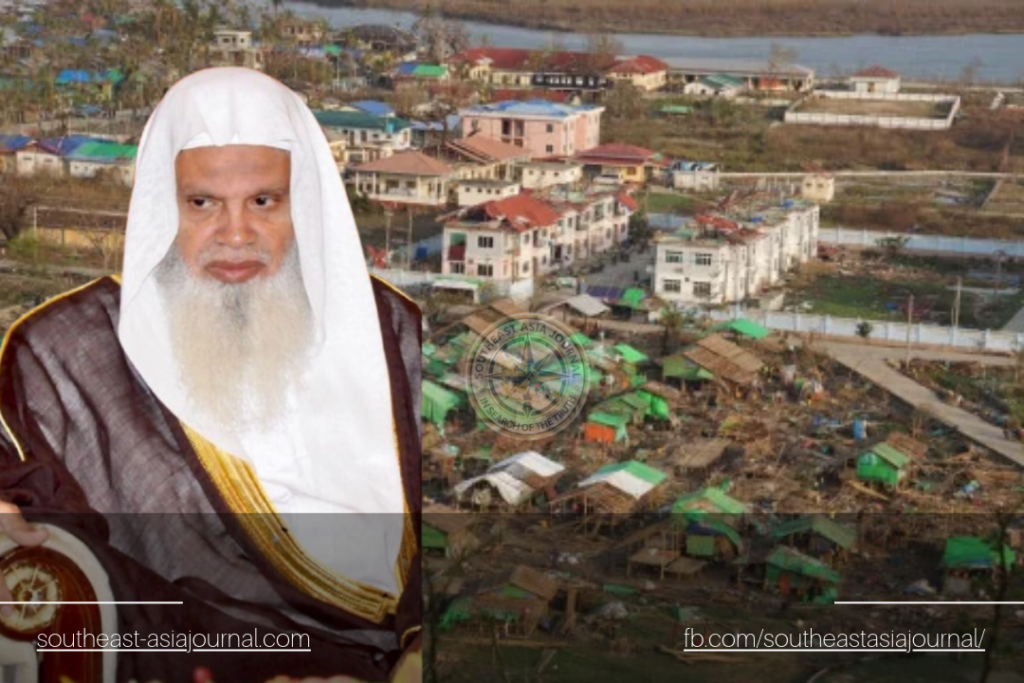
A voice fell silent
It was a Saturday in Madinah.
The date was 16 April 2016.
A man had died. His name was Muhammad Ayyub. He was sixty-four years old.
Many people who had never met him were saddened by the news. They did not know much about his family. They did not know what his childhood had been like. Some did not even know where his ancestors came from.
But they knew his voice.
They had listened to him reciting the Holy Quran during Ramadan. Some had listened to his recordings while travelling. Others had listened in the quiet hours of the night. After the midday prayer at the Prophet’s Mosque, his funeral prayer was offered. He was buried at Jannat al-Baqi.
A remarkable life had come to an end. There was an interesting fact about this man that many of his admirers did not know.
He was of Rohingya origin.
A country he inherited through memory
Every human being has a story of belonging. For some, it is the village where they were born. For others, it is a distant land they have come to know through the memories of their parents. For Muhammad Ayyub, that distant land was Arakan.
Arakan is a beautiful region. There are hills, rivers, agricultural fields and villages. The Naf River separates part of this region from Bangladesh. His ancestors lived near Maungdaw in northern Arakan. They were reportedly an agricultural family. His father, Muhammad Yusuf, eventually left his homeland and settled in Saudi Arabia.
We know very little about that journey.
What did he leave behind? Did he believe that he would return one day? Did he carry any belongings from his ancestral village?
History does not answer these questions.
History often records the movements of populations but forgets the stories of individual families.
In 1952, a boy was born into this Arakanese family in Makkah. His parents named him Muhammad Ayyub. The boy would eventually become one of the most familiar religious voices in the Muslim world.
A boy who crossed mountains
Childhood was not particularly easy for Muhammad Ayyub.
A retrospective account published in the Saudi newspaper Okaz describes how he crossed mountainous terrain to attend his Quran lessons. His family also experienced difficulties during a period of his father’s imprisonment.
Yet the boy continued his education.
There is something remarkable about children who pursue education despite difficult circumstances. They often have no idea how far their learning will eventually take them. Muhammad Ayyub probably could not have known that one day thousands of people would stand behind him in prayer at the Prophet’s Mosque.
At approximately twelve years of age, he memorised the entire Quran.
Twelve is an interesting age. Most children are still discovering the world around them. Muhammad Ayyub had already undertaken an extraordinary intellectual and spiritual task.
But he did not stop there.
He wanted to learn more.
The student who became a teacher
Muhammad Ayyub eventually moved to Madinah to pursue higher education at the Islamic University. He studied Islamic jurisprudence. Later, he developed a particular interest in Tafsir, the interpretation of the Quran.
Years passed.
The young student completed his master’s degree and subsequently earned a doctorate in 1987–88. His research focused on the Quranic interpretations of Sa’id ibn Jubayr, a prominent scholar of early Islamic history. The boy who had once crossed mountains to attend his lessons was now a university teacher. His students came from different parts of the world. He taught them the knowledge that he had spent much of his own life acquiring. He also became associated with the scientific committee of the King Fahd Complex for the Printing of the Holy Quran.
These achievements are sometimes overlooked because people remember him mainly for his beautiful recitation. But behind that familiar voice was a serious scholar. There were years of study, examinations, research and teaching.
A beautiful voice may be a natural gift. Scholarship requires sustained effort.
Muhammad Ayyub possessed both.
Standing in the mihrab
In 1990, something extraordinary happened. Muhammad Ayyub was appointed as an imam at Masjid al-Nabawi in Madinah. Imagine the responsibility of standing before thousands of worshippers in one of the most sacred places in Islam.
In a recollection subsequently published by Okaz, Muhammad Ayyub described his nervousness on his first occasion leading prayers there. His heart was beating rapidly. Even a man who had spent decades studying the Quran could feel nervous.
Perhaps that is what makes his experience so human. His recitation gradually became familiar to worshippers. It was particularly associated with the traditional Hijazi style of Quranic recitation.
People listened.
Some recorded his recitations. Others carried recordings back to their own countries. A voice that had once been heard by a small group of teachers and students was now travelling across continents.
It required no passport to cross a border.
Nineteen years of waiting
Muhammad Ayyub served at the Prophet’s Mosque until 1997. Then came a long period of absence from its mihrab. Nineteen years is a long time. A child born in 1997 would have nearly reached adulthood by the time Muhammad Ayyub returned. During those years, he continued his educational and religious activities. His recorded recitations remained popular.
In 2015, King Salman approved his return to lead Ramadan prayers at the Prophet’s Mosque. Muhammad Ayyub had reportedly expressed a wish to lead prayers there again before his death.
That wish was fulfilled. It was his last Ramadan.
Less than a year later, he was gone. Life sometimes gives people a final opportunity to return to a place that has special meaning to them. They may not know at the time that it is their final visit.
The distant village
There is another interesting chapter in the life of Muhammad Ayyub.
According to the Rohingya Research Foundation, he visited his ancestral village near Maungdaw around 2008. The precise circumstances of this visit require further historical verification. Nevertheless, the reported journey raises an interesting question.
Why does a person who has achieved so much in another country remain interested in a distant ancestral village?
Perhaps belonging is more complicated than nationality.
A person may be born in one country, receive an education in another and spend an entire lifetime far away from the land of his ancestors. Yet that ancestral land may continue to occupy a place in his identity. Muhammad Ayyub was born in Makkah. He became a scholar in Madinah. His voice reached millions of Muslims around the world. But his name also carried a geographical identity.
Al-Arakani.
A connection to Arakan.
The children beside the Naf River
Muhammad Ayyub died in April 2016.
In August of the following year, hundreds of thousands of Rohingya began crossing into Bangladesh. Among them were thousands of children. Some had lost their parents. Some had lost their homes. Many would spend years growing up in refugee camps. Today, a child walking through the narrow pathways of a refugee camp in Ukhiya or Teknaf may possess extraordinary talent.
One may have the potential to become a physician. Another may become a scientist. Another may become a university professor. There may even be another Muhammad Ayyub among them.
We do not know.
The tragedy is that without adequate education and opportunity, we may never know. When we discuss the Rohingya crisis, we frequently speak about food, shelter, humanitarian assistance and repatriation. These are essential matters.
But how often do we discuss the undiscovered talents of Rohingya children?
How many potential scholars will remain unknown because they never received an opportunity to study?
How many teachers will never enter a classroom?
The life of Muhammad Ayyub reminds us that displacement does not determine the intellectual capacity of a human being.
Opportunity matters.
A voice that never really disappeared
Muhammad Ayyub rests in Jannat al-Baqi.
His recorded recitations remain available. Somewhere in the world, someone may be listening to his voice for the first time today. That listener may know nothing about Arakan.
Nothing about Maungdaw.
Nothing about the Naf River.
For More Info Click Here.
Follow Our Facebook Page From Here.
Subscribe Our Youtube Channel quickly.
Nothing about the long history of Rohingya displacement.
Yet the voice reaching that listener belongs to a man whose family originated in that distant land.
There is a quiet lesson in his story. A community may lose its homeland. Its people may be denied citizenship. Its children may grow up behind the boundaries of refugee camps. But none of these circumstances diminishes their human dignity or potential. Muhammad Ayyub was not simply a Rohingya who became a famous imam. He was a scholar whose life demonstrated what education and opportunity could make possible.
His voice crossed borders that many members of his ancestral community could not.
And that is perhaps the most powerful part of his story.
References
Saudi Gazette. (2016, April 16). Sheikh Muhammad Ayoub, former Imam of Prophet’s Mosque, dies.
Saudi Gazette. (2016, April 18). Sheikh Ayoub’s euphonic recitation will be remembered.
Okaz. (2018, May 28). Biographical account of Sheikh Muhammad Ayyub. Arabic.
Rohingya Research Foundation. Sheikh Dr. Muhammad Ayyub.
Leider, J. P. (2018). Rohingya: The History of a Muslim Identity in Myanmar. Oxford Research Encyclopedia of Asian History.