99 Years of the PLA: The Future of Friendship, Professionalism, and Defense Cooperation from the Perspective of a Bangladeshi Military Officer

Lt Col (Retd) Md Shahadat Hossain
On 1 August 2026, the People’s Republic of China proudly commemorates the 99th anniversary of the founding of the People’s Liberation Army (PLA), one of the world’s largest and most modern armed forces. For the Chinese people, PLA Day is a solemn occasion to honour generations of officers and soldiers whose dedication, sacrifice and patriotism have contributed to safeguarding China’s sovereignty, territorial integrity, national security and development. For me, however, this day carries an even deeper personal significance. Every PLA Day reminds me of nearly four decades of friendship, professional interaction and unforgettable experiences with the officers and soldiers of the People’s Liberation Army.
My journey with China began on 15 September 1988 when, as a young officer of the Bangladesh Army, I arrived in Beijing to study Chinese language at the Beijing Language and Culture University (BLCU). At that time, I never imagined that learning Chinese would become one of the most important decisions of my life. It opened the door not only to understanding one of the world’s oldest civilizations but also to developing lifelong friendships with the Chinese people and the People’s Liberation Army.
Since then, I have travelled extensively throughout China, visiting many provinces and cities over nearly four decades. Every visit revealed a country that had become more modern, more prosperous, more innovative and more confident than before. During this remarkable transformation, I also witnessed the continuous modernization of the People’s Liberation Army into a highly disciplined, technologically advanced and increasingly professional military force prepared to meet the challenges of an evolving global security environment.
As a military officer and student of China, I have often reflected upon the factors behind China’s extraordinary transformation. Different scholars may offer different explanations, but from my own observation several factors stand out: visionary national leadership, political stability, long-term strategic planning, disciplined implementation of national policies, investment in education and scientific research, technological innovation, the diligence of the Chinese people and a strong sense of patriotism. Equally important has been the contribution of the People’s Liberation Army in maintaining the secure environment within which China’s remarkable economic and social development has taken place.
No country can achieve sustained national development without peace, stability and security. Throughout China’s reform and opening-up process and its subsequent modernization, the PLA has continuously evolved alongside the nation itself. From a predominantly land-oriented force, it has transformed into an integrated joint military capable of operating across land, sea, air, cyberspace, outer space and the information domain. Its modernization reflects China’s determination to build armed forces capable of safeguarding national sovereignty, development interests and regional stability while adapting to the changing character of modern warfare.
My association with the PLA has never been confined to academic observation. During my military career, I had the privilege of serving as an interpreter on numerous occasions involving senior political and military leaders of Bangladesh and China. Those assignments provided me with valuable opportunities to observe the professionalism, discipline and courtesy of PLA officers at close quarters.
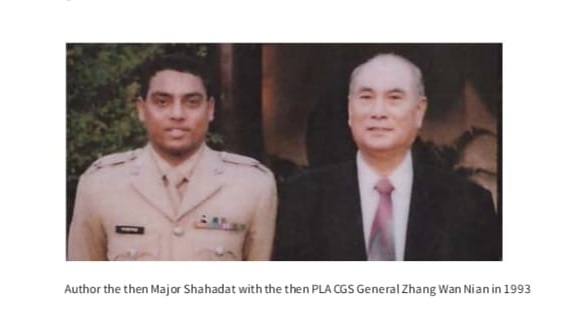
One of my most cherished memories was meeting the late General Zhang Wannian, then Chief of the General Staff of the People’s Liberation Army, during his official visit to Bangladesh in 1993. Although our interaction was brief, his confidence, humility and professionalism left a lasting impression on me. During that visit, he expressed his firm belief that the friendship between Bangladesh and China would remain unchanged forever. More than three decades later, I believe that history has fully justified those words.
Another unforgettable experience from that visit was serving as interpreter during the official banquet hosted in honour of the visiting Chinese military delegation. While delivering his speech, the then Chief of Army Staff of Bangladesh, Lieutenant General M. Noor Uddin Khan, psc, remarked that the Bangladesh Army was, in many respects, like a small People’s Liberation Army wearing Bangladesh Army uniform. The observation reflected the close defence cooperation of that period, when much of Bangladesh’s military modernization had benefited from China’s assistance. More importantly, it symbolized the high level of mutual trust and confidence that had developed between the armed forces of the two friendly nations.
My understanding of the PLA deepened further in 1997 while attending the one-year Defence Services Command and Staff College (DSCSC) course in Bangladesh. Three officers from the People’s Liberation Army—representing the Ground Force, Navy and Air Force—were among my fellow participants. Living, studying and training together for an entire year enabled us to exchange professional ideas, learn from one another and develop friendships that have endured long after our military careers.
One such friendship continues to this day with my former course mate, Lieutenant Colonel (Retired) Jiu Haiyan. Although we have both retired from active military service, we remain in regular contact. Our friendship represents, in a modest way, the enduring people-to-people and military-to-military ties that continue to strengthen Bangladesh–China relations. I know many Bangladeshi officers who have undergone military training in China or studied alongside PLA officers share similar experiences. Such friendships rarely appear in official communiqués, yet they often become the strongest foundation upon which lasting strategic partnerships are built.
As I join Chinese friends in celebrating the ninety-ninth anniversary of the People’s Liberation Army, I do so not merely as a retired Bangladeshi Army officer, but also as someone whose life has been enriched by decades of friendship with China. Those experiences have convinced me that genuine friendship between armed forces is built not only through official agreements or defence cooperation, but also through mutual respect, professional excellence, cultural understanding and enduring human relationships.
It is in that spirit that I offer these reflections on the People’s Liberation Army at ninety-nine—its remarkable transformation, its contribution to China’s development, and its continuing significance for the future of Bangladesh–China defence cooperation.
The People’s Liberation Army in the New Era: Modernization, Reform and Professional Excellence
The People’s Liberation Army traces its origin to the Nanchang Uprising of 1 August 1927. During the past ninety-nine years, it has evolved from a revolutionary force into one of the world’s most influential and technologically advanced military organizations. Throughout this remarkable journey, the PLA has remained an essential pillar of China’s national security while adapting continuously to changing strategic realities and emerging technologies.
Today’s PLA is far different from the force that many foreign military officers, including myself, first observed decades ago. Modern warfare is increasingly characterised by joint operations, artificial intelligence, cyber capability, space-based assets, electronic warfare, unmanned systems, long-range precision strike, integrated logistics and information superiority. Recognising these realities, China has undertaken one of the most comprehensive military reform programmes in its history.
Under the leadership of President Xi Jinping, who also serves as Chairman of the Central Military Commission (CMC), the PLA has pursued extensive reforms aimed at building a military that is modern, professional, disciplined and capable of winning information-based and intelligentized wars while effectively performing a wide range of military and non-military missions. The reforms have strengthened Party leadership over the armed forces, modernised command structures, improved joint operational capability, intensified realistic training and accelerated scientific and technological innovation across the services.
One of the most significant reforms has been the transition from the former military region system to a theatre command structure designed to enhance joint operations. The five Theatre Commands integrate the capabilities of the Ground Force, Navy, Air Force and other supporting forces, enabling coordinated planning and execution of operations. This reflects the understanding that future military challenges require seamless cooperation across all operational domains rather than isolated service-specific operations.
The PLA Ground Force has transformed itself from a manpower-intensive force into a more agile, mobile and technology-driven service. Modern armoured vehicles, long-range artillery, army aviation, special operations forces, unmanned systems and digital command networks have become increasingly important. Greater emphasis is now placed on quality, professionalism and rapid deployment rather than numerical strength alone.
The People’s Liberation Army Navy (PLAN) has undergone one of the most remarkable transformations among the world’s naval forces. From primarily coastal defence responsibilities in earlier decades, it has developed into a modern blue-water navy with advanced destroyers, frigates, submarines, amphibious assault ships, replenishment vessels and aircraft carriers. Its escort missions against piracy in the Gulf of Aden and participation in humanitarian and evacuation operations have demonstrated its expanding international role.
The People’s Liberation Army Air Force (PLAAF) has similarly developed into a highly capable modern air force equipped with advanced fighter aircraft, strategic transport platforms, airborne early-warning systems, aerial refuelling capability, integrated air defence networks and increasingly sophisticated unmanned aerial systems. Air power today plays a critical role not only in national defence but also in disaster relief, humanitarian assistance and joint military operations.
The PLA Rocket Force remains central to China’s strategic deterrence posture, while recent organisational reforms have also strengthened capabilities in information support, cyber operations, communications, electronic warfare and other emerging domains. These developments reflect the reality that future security challenges will increasingly depend upon technological innovation, information superiority and the integration of multiple operational capabilities.
Equally impressive is the PLA’s emphasis on human capital. Modern military effectiveness depends not only upon sophisticated weapons but also upon educated officers, skilled non-commissioned officers, professional soldiers and capable scientists and engineers. China’s continued investment in military education, defence research, indigenous innovation and realistic training reflects a long-term commitment to building institutional excellence.
China has publicly outlined long-term objectives for national defence modernisation, including achieving major milestones by the centenary of the PLA in 2027 and continuing broader military modernisation in the years ahead. These objectives are closely aligned with China’s overall national development strategy and its stated commitment to safeguarding sovereignty, security and development interests while maintaining a defence policy that China describes as defensive in nature.
Beyond its national responsibilities, the PLA has increasingly participated in international peacekeeping, humanitarian assistance, disaster relief, anti-piracy operations and military diplomacy. China has become one of the largest contributors of peacekeepers among the permanent members of the United Nations Security Council. Bangladesh, too, has earned global respect as one of the world’s leading troop-contributing countries to UN peacekeeping missions. This shared commitment to international peace provides an important platform for closer professional cooperation between the armed forces of our two countries.
China has consistently reaffirmed its commitment to the One China Principle and its preference for peaceful reunification across the Taiwan Strait while opposing activities that it regards as promoting Taiwan independence. The Taiwan question remains one of China’s core national interests and continues to shape aspects of the PLA’s strategic planning. Regardless of differing international perspectives, understanding China’s official position is essential for appreciating the context in which the PLA continues its modernisation.
As a retired officer of the Bangladesh Army, I have followed these developments with considerable professional interest. Every military institution must adapt continuously to technological change and evolving security environments. Although each nation has its own strategic circumstances, the PLA’s experience demonstrates the importance of visionary leadership, institutional reform, jointness, disciplined implementation, investment in education, scientific innovation and long-term strategic planning. These are universal lessons from which military professionals around the world can benefit.
For Bangladesh, the evolution of the PLA also offers opportunities for deeper professional engagement. Military education, command and staff training, peacekeeping preparation, defence medicine, engineering, disaster management, cyber security, artificial intelligence, logistics, communications and maritime security are among the many areas where greater exchanges and cooperation could further strengthen the professional relationship between the People’s Liberation Army and the Armed Forces of Bangladesh in the years ahead.
Bangladesh–China Defence Cooperation: Built on Trust, Professionalism and Enduring Friendship
The friendship between Bangladesh and China has grown steadily since the establishment of diplomatic relations in 1975. Today, the relationship extends far beyond diplomacy. China has become one of Bangladesh’s most important development partners in infrastructure, trade, investment, energy, health, education and technology. Defence cooperation has likewise become one of the most stable and enduring pillars of this comprehensive partnership.
For me, however, Bangladesh–China defence cooperation is not merely a subject of professional study. It is also a story of personal experience.
After graduating in Chinese language from Beijing Language and Culture University, I had the privilege of serving as an interpreter during several high-level meetings between the leaders of Bangladesh and China. Those assignments enabled me to observe first-hand the sincerity, mutual respect and strategic confidence that characterised relations between the two countries.
Among the memories that remain closest to my heart is my meeting with the late General Zhang Wannian, then Chief of the General Staff of the People’s Liberation Army. His calm confidence, humility and professionalism reflected the qualities that I came to admire in many PLA officers over the years.
I also vividly remember serving as interpreter during the official banquet hosted in honour of the visiting Chinese military delegation. While delivering his address, the then Chief of Army Staff of Bangladesh, Lieutenant General M. Noor Uddin Khan, psc, made a memorable observation that the Bangladesh Army was, in many respects, like “a small People’s Liberation Army wearing Bangladesh Army uniform.” Although expressed in a ceremonial setting, the remark reflected the close defence relationship that had developed through years of cooperation, professional exchanges and Chinese support for the modernisation of Bangladesh’s defence capabilities.
Another memorable chapter unfolded during my one-year course at the Defence Services Command and Staff College (DSCSC) in 1997. Three officers from the People’s Liberation Army—one each from the Ground Force, Navy and Air Force—were among my fellow participants. For an entire year we studied military strategy, operational art, command, leadership and international security together. We also learned about each other’s history, traditions and military culture.
Professional military education creates a unique environment where officers from different countries learn not only from instructors but also from one another. It builds trust that often continues long after uniforms are put away.
One of those friendships has continued for nearly three decades. I still maintain regular contact with my former PLA course mate, Lieutenant Colonel (Retd) Jiu Haiyan. Although both of us are now retired, our friendship continues to symbolise the enduring people-to-people relationship that complements official defence cooperation between our two countries.
I know many Bangladeshi military officers who have attended professional courses in China or served alongside PLA officers during exchanges and visits. Many of them carry similar memories. Such friendships rarely attract public attention, yet they quietly strengthen mutual understanding and create confidence between armed forces.
As someone who has observed China’s development since the late 1980s, I believe one of the PLA’s greatest strengths lies in its commitment to continuous learning and institutional reform. Modern military power depends not only on advanced weapons but also on disciplined leadership, professional education, scientific research, technological innovation and realistic training. These are qualities that every professional armed force seeks to cultivate.
Looking ahead, Bangladesh–China defence cooperation should continue to evolve in response to emerging security challenges. While traditional cooperation in defence equipment and training remains important, the future will increasingly require collaboration in new domains such as cyber security, artificial intelligence, unmanned systems, satellite applications, electronic warfare, military medicine, defence industry research, maritime security and disaster response.
Bangladesh can also benefit from expanded cooperation in professional military education. Increased exchanges among military academies, command and staff colleges, national defence universities and specialised training institutions would allow officers of both countries to deepen their understanding of contemporary security issues while strengthening long-term institutional relationships.
Another area of great potential is United Nations peacekeeping. Bangladesh is one of the world’s leading troop-contributing countries, while China is the largest contributor of peacekeepers among the permanent members of the UN Security Council. Joint training, engineering cooperation, medical support, logistics, humanitarian assistance and post-conflict reconstruction could further enhance the contributions of both countries to international peace and security.
I also believe that military diplomacy should continue to promote greater understanding among younger officers. Every officer who studies abroad returns home with broader perspectives, deeper cultural understanding and lasting professional friendships. Such human connections are among the strongest foundations of enduring bilateral relations.
In my humble opinion, the greatest strength of Bangladesh–China defence cooperation is not measured solely by military hardware or official agreements. It is measured by mutual confidence, professional respect and the friendships that generations of officers have built through study, training, dialogue and shared experiences. These relationships create trust that cannot be purchased and cannot easily be replaced.
Having devoted much of my professional and post-retirement life to promoting Bangladesh–China friendship, I remain optimistic that cooperation between the People’s Liberation Army and the Armed Forces of Bangladesh will continue to expand in the years ahead. Guided by mutual respect, equality, non-interference in each other’s internal affairs and shared interests in regional peace and development, the two armed forces can continue to build a partnership that benefits not only our respective nations but also the wider region.
Looking Ahead: Shared Security, Regional Connectivity and a Common Future
Throughout my long association with China, one conviction has grown stronger with every passing year: sustainable development is only possible in an environment of peace, stability and mutual trust. Military strength is most meaningful when it serves as a guardian of peace, national development and regional cooperation.
For many years, I have advocated stronger land connectivity between Bangladesh and China’s Yunnan Province through Myanmar. Such a corridor has the potential to transform economic cooperation by facilitating trade, tourism, cultural exchanges, investment and people-to-people contacts across South and Southwest Asia. Properly planned and peacefully implemented, it could become a bridge connecting millions of people and generating shared prosperity for the entire region.
I vividly remember the official visit of the late Prime Minister Begum Khaleda Zia to Yunnan Province in December 2002. During her meeting with the Governor of Yunnan on 26 December 2002, greater regional connectivity and economic cooperation were among the important subjects discussed. More than two decades later, this vision continues to receive renewed attention as Bangladesh and China explore new opportunities for expanding regional cooperation.
The official visit of Bangladesh’s Prime Minister Tarique Rahman to China in June 2026 marked another important milestone in bilateral relations. The two countries agreed to elevate their relationship to a China–Bangladesh Community with a Shared Future in the New Era, reaffirmed their commitment to expanding practical cooperation in many sectors, and expressed their intention to strengthen dialogue, including in the field of defence. These developments demonstrate the confidence that both countries place in their long-term strategic partnership.
Yet roads, railways, ports and economic corridors alone cannot guarantee prosperity. Lasting connectivity requires peace, security and political stability. It is therefore in the common interest of all countries in the region to promote dialogue, mutual respect and peaceful cooperation.
The prolonged Rohingya humanitarian crisis remains one of the region’s most complex challenges. Bangladesh has demonstrated remarkable generosity by providing shelter to displaced Rohingya people for many years despite significant economic, environmental and social pressures. A durable solution requires constructive engagement among all concerned parties. As a close friend of both Bangladesh and Myanmar, China is well placed to continue supporting dialogue and confidence-building efforts aimed at creating conditions for the safe, voluntary and dignified repatriation of the displaced population. A peaceful resolution would contribute significantly to regional stability and economic cooperation.
The Belt and Road Initiative has already highlighted the importance of connectivity in promoting development across Asia and beyond. As regional infrastructure networks continue to expand, maintaining peace and security along these corridors will become increasingly important. Although economic development remains the primary objective, professional military cooperation, humanitarian assistance, disaster response and confidence-building measures can also help create a stable environment for long-term regional prosperity.
The People’s Liberation Army has increasingly demonstrated its commitment to international peace through participation in United Nations peacekeeping operations, humanitarian assistance, disaster relief, anti-piracy missions and defence diplomacy. Bangladesh has likewise earned worldwide recognition as one of the leading contributors to UN peacekeeping. This shared commitment to peace provides another strong foundation for enhanced cooperation between the armed forces of our two countries.
Looking to the future, I hope Bangladesh–China defence cooperation will increasingly focus on knowledge sharing, professional military education, advanced technology, cyber security, artificial intelligence, maritime security, engineering, logistics, military medicine, disaster management and peacekeeping. Such cooperation will contribute not only to the professional development of both armed forces but also to the broader goal of regional stability.
As a retired officer of the Bangladesh Army, I firmly believe that the true strength of a defence relationship is measured not merely by the quantity of military equipment acquired but by the quality of mutual trust, institutional cooperation and lasting friendships developed between military professionals. Equipment changes with time; genuine friendship and professional respect endure for generations.
When I first landed in Beijing on 15 September 1988 as a young army officer to study Chinese language, I never imagined that this journey would become a lifelong mission of friendship. Learning Chinese enabled me to understand a great civilization, introduced me to countless friends, and gave me opportunities to contribute, in my own modest way, to promoting understanding between Bangladesh and China. For these experiences, I remain deeply grateful.
As the People’s Liberation Army prepares to celebrate its centenary next year, its remarkable journey over the past ninety-nine years offers valuable lessons in discipline, professionalism, institutional reform, technological innovation and long-term strategic planning. Military professionals throughout the world, regardless of differences in national systems, can appreciate the importance of continuous learning, adaptation and commitment to national service.
For More Info Click Here.
Follow Our Facebook Page From Here.
Subscribe Our Youtube Channel quickly.
On this auspicious occasion of the 99th anniversary of the founding of the People’s Liberation Army, I extend my heartfelt congratulations and best wishes to all officers, soldiers, veterans and their families. I also express my sincere hope that the friendship between the People’s Liberation Army of China and the Armed Forces of Bangladesh will continue to grow through deeper professional exchanges, greater mutual understanding and expanded cooperation for the benefit of our two nations and for peace, stability and shared prosperity in Asia and beyond.
The author is Lt Col (Retd) Md Shahadat Hossain, psc, a former Infantry officer of the Bangladesh Army, a graduate in Chinese Language from Beijing Language and Culture University (BLCU), General Secretary of We Speak Chinese Club Bangladesh Limited, Founder of Zhong Meng Chinese Academy, and a long-time researcher, interpreter and promoter of Bangladesh–China friendship and people-to-people exchanges.